As the U.S. and China Vie for AI Dominance: Taiwan’s Sovereign AI Vision Across Eurasia
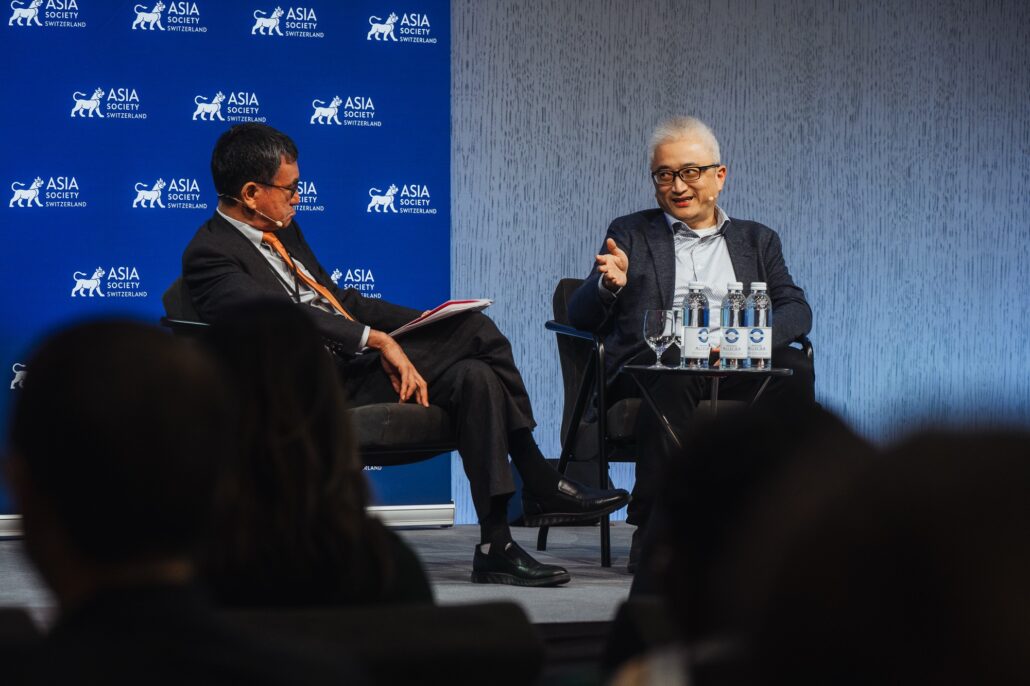
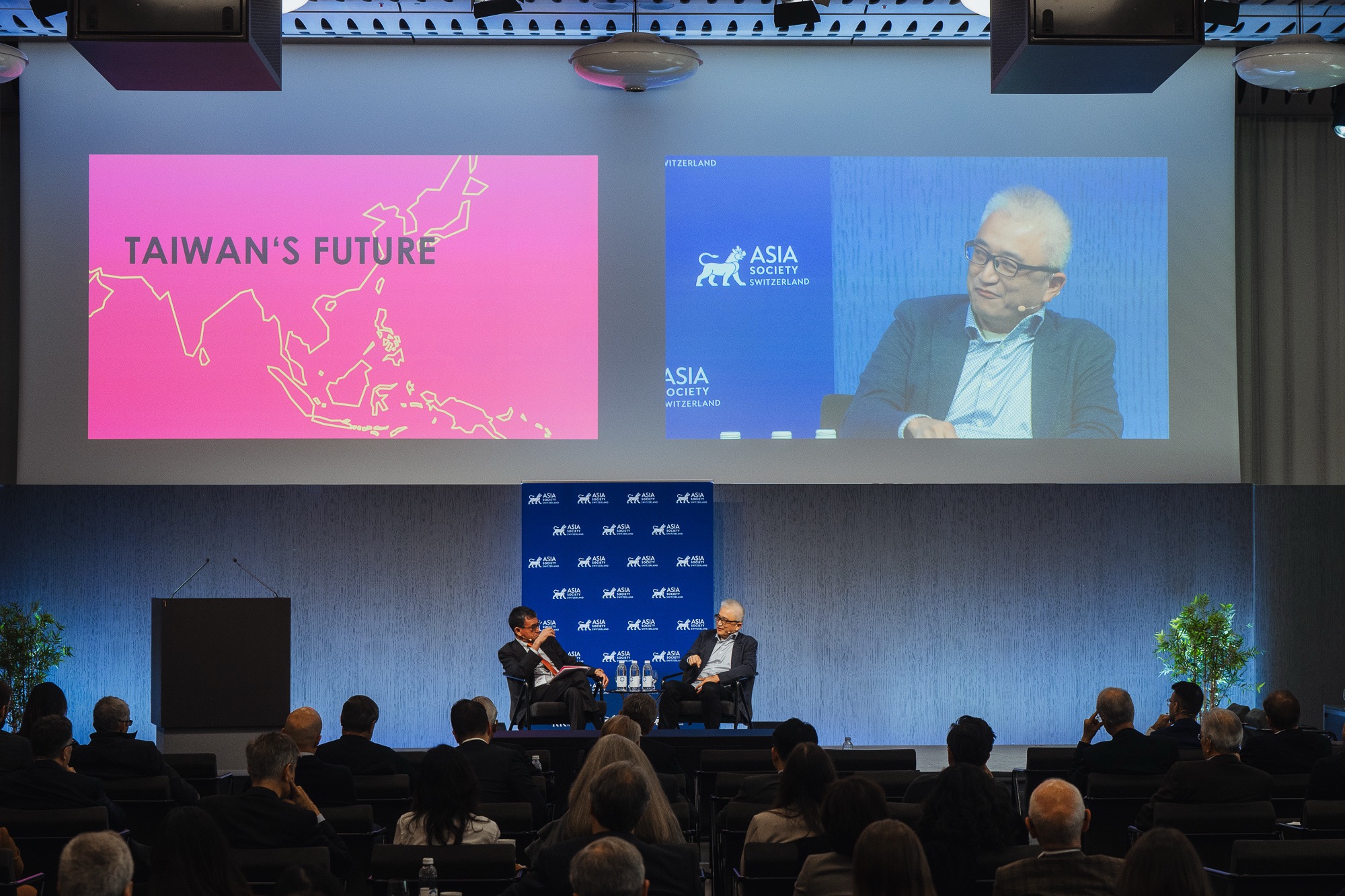
As the United States and China compete for dominance in artificial intelligence, AI sovereignty and technological autonomy have become shared challenges for countries around the world. Ethan Tu, founder of Taiwan AI Labs, was invited to speak at the international STATE OF ASIA forum in Switzerland, where he exchanged views with Japanese politician Taro Kono, who served as Minister for Foreign Affairs and Minister of Defense under the Abe administration, and as Minister for Digital Affairs under the Kishida administration.
Drawing on the geopolitics of AI between the United States and China, the discussion explored how Taiwan can leverage sovereign AI, federated learning, and international collaboration to foster technological exchange between Europe and Asia and collectively strengthen digital resilience.
The conversation offered valuable perspectives on technological autonomy and international cooperation in the age of AI. The following is the full text of the speech.
Who Safeguards Our Sovereignty in the Age of AI Competition?
Distinguished guests, friends from Europe and Asia, good morning.
Today, I would like to draw on Taiwan’s experience to discuss a question that will shape the future global order:
As artificial intelligence increasingly becomes the foundation of our economy, technology, national security, and even the functioning of democratic societies, can we still determine our own future?
Over the past few years, the world has been debating who will win the AI race between the United States and China. The United States has leading AI research institutions, cloud platforms, advanced chip design capabilities, and capital markets. China, meanwhile, is actively developing its own AI models, computing infrastructure, and industrial applications.
But for Taiwan, Europe, and many small and medium-sized countries, the real question is not who will win. It is whether other countries will retain the ability to determine their own technology policies, protect their data, maintain critical services, and safeguard their democratic institutions as major powers compete for AI leadership.
Can we afford to depend solely on a handful of companies for AI models and computing power? As healthcare, finance, energy, government, and even public discourse increasingly rely on AI, will we still be able to understand, verify, and control these systems?
AI sovereignty is not simply about technological self-sufficiency. It is about preserving the freedom of nations and societies to make their own choices.
Today, I would like to share how we can work together across three dimensions: U.S.–China AI geopolitics, Taiwan’s sovereign AI and federated learning, and the joint development of digital resilience between Taiwan and Europe.
I. U.S.–China AI Competition: Taiwan Is More Than a Trusted Supply Chain—It Is a Co-Creator of the Global AI Order
Artificial intelligence is transforming from a technological innovation into a central force in global geopolitics.
In the past, national power was determined by energy resources, industrial capacity, and military strength. Today, AI competition encompasses an entire ecosystem—from energy, semiconductors, computing power, cloud infrastructure, data, and models to AI agents, industrial applications, and public trust.
Taiwan plays a critical role in advanced semiconductor manufacturing. Japan has strengths in semiconductor equipment, materials, and industrial technology. South Korea holds an important position in memory and semiconductor industries. Singapore is actively advancing AI governance. India has a vast pool of software talent and a multilingual market. Southeast Asia is developing AI applications tailored to its own needs.
These countries are not bystanders in the U.S.–China competition. They are indispensable participants in the global development of AI.
Asia is not a battleground for U.S.–China AI competition. It is a co-creator of global AI governance and technological cooperation.
This is particularly important for Europe. Europe has its own values, regulatory frameworks, industrial capabilities, and research traditions. It does not need to simply replicate the American or Chinese models.
Asia and Europe can jointly explore a third path: maintaining open collaboration while preserving technological choice and governance autonomy.
Taiwan’s experience offers an important case study.
When people around the world think of Taiwan, TSMC is usually the first name that comes to mind. But Taiwan is not only a critical supplier of AI chips to the world. It is also a vibrant hub for technological innovation and a democratic society that has long faced geopolitical pressure, cyberattacks, and information manipulation.
Therefore, Taiwan’s concern is not simply how to develop more powerful AI, but how to ensure that AI remains secure, trustworthy, and operational even in the face of external disruptions.
We must ensure that Taiwan can embrace AI transformation without becoming an AI colony.
II. Sovereign AI and Federated Learning in Taiwan: Innovation Does Not Mean Surrendering Control
In recent years, sovereign AI has become a prominent topic of international discussion. But sovereign AI does not mean every country must manufacture its own chips, build large-scale AI models, or construct data centers from scratch.
From Taiwan’s perspective, the true foundation of sovereign AI lies in five key capabilities.
First, data sovereignty: the ability to determine how data is collected, stored, processed, and used.
Second, model sovereignty: the ability to select, deploy, validate, audit, and replace AI models.
Third, infrastructure sovereignty: ensuring that critical AI services are portable, replaceable, and capable of operating locally when necessary.
Fourth, compute sovereignty: maintaining control over and access to the computing resources necessary for critical AI services.
Fifth, governance sovereignty: ensuring compliance with regulatory frameworks in sectors such as advanced healthcare and finance, while protecting human rights and privacy. Democratic societies must retain the ability to make independent judgments and prevent public discourse from being systematically distorted by opaque algorithms or coordinated information manipulation.
These five capabilities are interdependent. Even if a country owns its data, it may still lose autonomy if it cannot control its models. And even if it has its own models, it remains exposed to systemic risks if it relies entirely on external infrastructure.
The goal of sovereign AI is not to reinvent every technology. It is to ensure that every country, enterprise, and individual has the ability to choose, verify, replace, and govern the technologies they use.
Federated technology offers an important mechanism for international collaboration.
AI requires vast amounts of data. Yet the most valuable data is often also the most sensitive.
Hospitals hold medical images, pathology reports, and clinical records, but must protect patient privacy. Banks possess transaction data and fraud patterns, but cannot freely exchange customer information.
We face a fundamental dilemma: we need more data to develop better AI, yet we must also protect data security and autonomy.
At Taiwan AI Labs, we have been exploring federated learning applications in healthcare and finance. This enables multiple hospitals to jointly train medical imaging models, and financial institutions to collaborate on improving fraud detection, all while protecting their respective data.
Of course, federated learning does not automatically eliminate privacy or cybersecurity risks. It still requires safeguards such as secure aggregation, differential privacy, access controls, model auditing, and legal governance.
Nevertheless, it offers an important possibility: AI can collaborate across organizations and borders without requiring participants to surrender control of their data.
This is particularly important for the European Union.
Europe has vast amounts of high-quality healthcare, financial, industrial, and public-sector data, yet these resources are fragmented across countries, languages, institutions, and legal systems.
Through federated learning, hospitals in Germany, France, Switzerland, the United Kingdom, and Taiwan could jointly research disease models without centralizing patient data. Financial institutions could collaborate on identifying cross-border risks. Industrial companies could jointly improve AI systems while protecting commercial secrets.
The sovereign AI of the future may not be a massive centralized platform. It may instead be a network of autonomous nodes that trust one another and learn together.
III. From Sovereign AI to Comprehensive Resilience: Four Areas for Taiwan–Europe Cooperation
However, sovereign AI cannot stop at data and models.
If critical networks are disrupted, systems are attacked, or the public information environment is manipulated, even the most advanced AI cannot guarantee that society will continue to function normally.
I believe Taiwan and Europe should work together to develop four mutually reinforcing capabilities.
1. Sovereign AI Collaboration and Cross-Border AI Validation and Certification
Establish a Taiwan–Europe federated AI research network, starting with healthcare, finance, and public services. Together, we can develop cross-border model validation, privacy protection, and auditable AI deployment frameworks.
This would allow countries to retain their authority over data and model governance while collectively building AI capabilities.
2. Network Resilience
Taiwan relies heavily on submarine cables, international communications networks, and cloud services. Europe faces similar challenges arising from interdependence across borders and critical infrastructure.
We can jointly research submarine cable resilience, satellite backup systems, distributed computing, and the ability of critical services to remain operational during international network disruptions.
We do not simply need faster networks. We need networks that will not fail completely when a crisis strikes.
3. Cyber Resilience
AI is transforming both cyberattacks and cyber defense.
Attackers can use AI to create more convincing phishing messages, impersonate identities, and identify vulnerabilities. Defenders, meanwhile, can use AI to analyze threats, detect anomalous behavior, and accelerate incident response.
But when we use AI to protect critical infrastructure, who protects AI itself?
Taiwan and Europe can jointly develop AI security evaluations, agent red-team testing, cross-border threat intelligence sharing, and federated cyber threat detection. We can also establish comprehensive cooperation mechanisms spanning prevention, response, and recovery.
4. Cognitive Resilience
Generative AI has dramatically lowered the cost of producing text, images, audio, and video, making information manipulation across languages and platforms easier to scale.
Information manipulation does not necessarily rely on fabricated facts. It can also exploit selective context, misleading narratives, and coordinated accounts to create a false impression of public consensus.
Therefore, we should not ask only whether a news story is true or false. We must also examine how content spreads, whether there are unusual patterns of synchronized behavior, and whether coordinated operations are deliberately concealed.
Through research initiatives such as Infodemic.cc, Taiwan AI Labs is exploring how AI and network analysis can identify coordinated behavior in information dissemination.
This presents significant opportunities for collaboration with European research efforts on FIMI (Foreign Information Manipulation and Interference).
Taiwan and Europe can jointly develop multilingual information analysis capabilities, standards for publicly verifiable evidence, research datasets, and talent exchange mechanisms.
Artificial intelligence is reshaping the global power structure. But more powerful models and cheaper computing will not automatically bring security, freedom, or trust.
Taiwan and Europe have an opportunity to build a new model of AI cooperation.
One that protects data while allowing knowledge to flow.
One that enables models to collaborate across borders while institutions retain their governance authority.
One that allows critical networks and digital services to withstand disruptions.
And one that enables democratic societies to preserve their independent judgment in the age of AI.
Such cooperation should go beyond policy declarations. Through joint research, technical validation, cross-border exercises, and open standards, we can gradually build a trusted international network of collaboration.
Three final thoughts:
“Sovereignty without cooperation risks isolation.”
Sovereignty without cooperation may lead to isolation.
“Cooperation without sovereignty risks dependency.”
Cooperation without autonomy may create dependency.
“But sovereignty through trusted cooperation creates resilience.”
Cooperation built on trust and autonomy is what truly creates resilience.
The future of AI should not be determined solely by the most powerful countries or the largest technology companies.
Taiwan, Asia, Europe, and all countries committed to building trustworthy technologies and governance systems should have the ability to participate in shaping the future of artificial intelligence.
The future of AI should not be defined only by the power to compute, but also by the freedom to choose, the capacity to cooperate, and the resilience to remain democratic.
This is the future I hope Taiwan and Europe can build together.
Thank you.
